Pay Attention to Campus Health
As an important place for students to study and live, campus air quality has attracted growing attention with the improvement of public health awareness and the strengthening of national control over public health incidents. Classrooms are crowded with poor air circulation, which can easily affect respiratory health. Moreover, newly decorated classrooms often face problems such as excessive formaldehyde and PM2.5, which are harmful to the health of teachers and
students. In recent years, more and more campus indoor air pollution incidents have been reported, becoming a socially influential issue.

Although many schools carefully select various environmentally friendly materials to ensure student safety, reducing indoor air pollution to a certain extent, volatile organic compounds are released over the long term. Certain triggering factors may lead to the massive release of harmful substances in a short period. For example, formaldehyde, a well-known pollutant, can be released for up to 15 years. Indoor pollution is not limited to the volatilization of chemical pollutants; it also includes physical solid particulate pollution such as dust from outdoor air pollution brought by window ventilation, as well as biological pollution sources such as various suspended wastes from daily human metabolism and bacteria and viruses indoors.
Environmental Characteristics
As a concentrated area for student activities, classrooms are relatively crowded. In natural conditions such as low temperatures, smog, or rain, keeping doors and windows closed for a long time can easily cause indoor hypoxia. Research shows that when air conditioners are used in hot summer or doors and windows are closed in cold winter, classroom air quality is poor, with excessive CO2 leading to symptoms such as hypoxia, chest tightness, and drowsiness, directly affecting students' learning efficiency. Some students always feel sleepy in class, which may be related to the reduced oxygen content in the classroom. Long-term hypoxia can cause irreversible physical harm.
Campuses are also public places where students gather, making the outbreak of collective infectious diseases common. Especially in primary schools and kindergartens, children have weak resistance and are more likely to be infected by allergens such as bacteria and viruses. Airborne transmission is the most common form of infectious disease spread. Therefore, strengthening campus air disinfection and blocking potential virus transmission chains through scientific methods without affecting normal teaching order is a key priority for protecting the safety of all teachers and students.
Get to Know Campus Fresh Air Systems
Introducing campus fresh air purification and disinfection projects and accelerating the adoption of fresh air systems on campuses have become an indispensable part of building smart and healthy campuses. Kangbeijing is an enterprise specializing in the R&D, production, and sales of air purification and disinfection products. Its plasma fresh air system KJ-A7 is specially developed and designed for campus scenarios. With strong performance, high quality, and high safety, this fresh air product meets various school requirements and strives to contribute to improving the air quality of classrooms in primary and secondary schools in China. Plasma technology is the latest sixth-generation air purification technology, which can continuously refresh the air through the dual comprehensive effects of physics and chemistry, with an environmentally friendly working process that allows coexistence of humans and machines. The plasma fresh air system KJ-A7 effectively combines sterilization and disinfection, high-efficiency purification, and clean fresh air. It can quickly remove bacteria, viruses, odors, PM2.5, formaldehyde, and other pollutants in classrooms, while effectively reducing indoor CO2 concentration. Classrooms can be ventilated without opening windows, allowing children to breathe healthy, clean, germ-free, and fresh air.
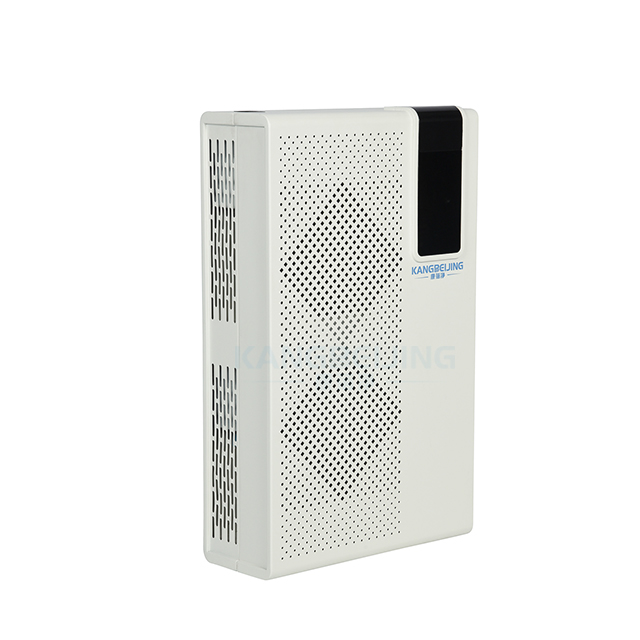
Image: Kangbeijing KJ-A7 Indoor Plasma Fresh Air System
★ Safe Sterilization
The sixth-generation plasma sterilization module achieves safe sterilization by strongly destroying the biological structure of bacteria and viruses in the air. Continuous air circulation continuously kills bacteria and viruses, reducing the outbreak and spread of infectious diseases such as influenza, and guarding every breath of children. The product can effectively remove harmful substances such as bacteria and viruses, with a sterilization rate of up to 99.9% verified by authoritative testing, maintaining long-term good indoor air quality in classrooms.
★ Clean and Fresh Air
In crowded and closed classrooms, CO2 concentration is prone to exceed standards, often causing hypoxia and discomfort. Kangbeijing's plasma fresh air system provides 24-hour cyclic ventilation and oxygenation with ultra-large air volume and fast air circulation, quickly refreshing indoor air and ensuring sufficient oxygen in classrooms at all times. The fresh air purification system can ventilate the room regardless of weather and building conditions, introducing clean outdoor fresh air 24 hours a day even with doors and windows closed. This increases indoor oxygen content, meets the oxygen needs of many people in large spaces, and improves students' mental state and learning efficiency.
★ High-Efficiency Purification
Classrooms are full of chalk dust, along with common particulate matter such as PM2.5, PM10, and dust, resulting in high particulate matter concentration. Kangbeijing's plasma fresh air system can exhaust polluted air outdoors. Meanwhile, the machine is equipped with multiple filters for high-efficiency filtration, blocking allergen carriers such as smog, dust, catkins, bacteria, and viruses, and effectively filtering out outdoor pollutants such as dust and PM2.5 to purify the indoor environment.
★ Quiet Operation
Children need a quiet learning environment, but window ventilation always brings noise. Closing the windows and turning on Kangbeijing's plasma fresh air fan allows quiet operation, free from noise interference during classroom teaching, without distracting children's attention, enabling them to enjoy healthy breathing while keeping windows closed.
Children are the future of families, as well as the future of the country and the nation. Their physical and mental health is not only what parents hope for but also the top priority of educational administrative departments and primary and secondary school work. Schools are the cradle of children's growth, and classrooms are where children stay the longest during school hours. Clean and fresh air is crucial for children's healthy growth. Kangbeijing's plasma fresh air system is committed to introducing "fresh air" into campuses and solving classroom air quality issues.


