The Start of Autumn has passed. Have you noticed people around you coughing, sneezing repeatedly and suffering from stuffy noses?
Many initially assume it is just seasonal cold that will pass on its own. However, medical professionals have recently issued repeated reminders: recurring nasal itching, continuous sneezing and clear runny nose in early autumn may not stem from a cold, but rather from seasonal shifts in air composition.
(According to a report published by Shenyang Release on August 15, 2026, physicians from the Department of Respiratory Medicine at the First Hospital of China Medical University note that late summer and early autumn bring another peak pollen season. Symptoms are not limited to nasal discomfort; they may spread to lower respiratory tracts, triggering cough and chest tightness.)
So why does indoor and outdoor air quality deteriorate during the summer‑autumn transition?
I. Four Overlapping Factors That Degrade Air Quality
Outdoors: The second pollen peak Most people associate pollen allergies exclusively with spring. Yet for large swathes of northern China, August‑October marks a secondary high‑risk period. Herbaceous plants including Artemisia (sweet wormwood, Russian thistle, Mongolian wormwood), ragweed and humulus lupulus enter full bloom.
A single artemisia plant can produce hundreds of millions of pollen grains, which drift hundreds of kilometres with wind. The fine tiny particles can penetrate ordinary cotton masks. Historically, pollen concentrations begin rising in late August, peak in September, and subside only after temperature drops in late October.
Temperature swings: Respiratory mucosa under strain Diurnal temperature gaps frequently reach 5‑8℃ in summer‑autumn months. Frequent shifts between hot and cold constrict nasal mucosal blood vessels and weaken mucosal barriers. Cold air itself can act as an allergy trigger for certain individuals.
Indoors: Dust mites and mould thrive in seasonal transition Dust mites in mattresses and curtains reproduce most vigorously at this time of year. Mould spores accumulating in air‑conditioner filters and wall corners are also hidden allergens. As temperatures drop and window ventilation decreases, these contaminants keep building up indoors.
Air‑conditioners: Dust spreaders neglected all summer After months of summer operation, uncleaned air‑conditioner filters and dust covers trap large volumes of dust, dust‑mite debris and mould. Once the unit runs, these pollutants circulate throughout rooms and directly irritate upper respiratory tracts.
(According to Jiefang Daily‑Shangguan News & Popular Science China, Zhang Luo, President of Beijing Tongren Hospital, states that over 200 million people in China live with allergic rhinitis. Allergen protection is required every single day.)
II. You May Escape Outdoor Irritants, but Indoor Space Is the Real Battlefield
Among doctors’ advice for pollen‑allergy sufferers: reduce window opening during pollen seasons and use air purifiers fitted with HEPA filters.
In reality, many households either leave their purifiers switched off or operate them with overdue filters. This creates an awkward situation: pollen drifts in from outdoors while dust mites and mould multiply indoors. Both indoor and outdoor environments contribute to poor air quality.
People often believe poor air quality exists only outside and closing windows guarantees safety. In seasonal transition, indoor‑outdoor air remains interconnected: pollen carried in by people, dust blown out of unwashed air‑conditioners, and mould growing in damp corners constitute the air people breathe for most of each day.
III. Establish Routine Purification to Fight Seasonal Allergies
Kangbeijing plasma air disinfection‑purification terminals.
These devices are not medicines and make no claims to cure allergies or colds. Neither do they replace natural window ventilation.
They deliver routine air purification: when windows stay closed, ventilation is impractical, or outdoor pollutants infiltrate indoors, the equipment continuously suppresses airborne particulate matter and microorganisms to lower daily pollutant exposure for all family members.
Built around DBD plasma technology, Kangbeijing air disinfection‑purification terminals feature three core advantages suitable for long‑term household operation:
Physical interception plus plasma disinfection: Filters trap airborne pollen grains, dust‑mite fragments and mould spores. Plasma technology inactivates airborne bacteria and viruses (specific performance data shall refer to official test reports of corresponding models).
Near‑zero ozone output, zero UV leakage: Laboratory‑tested ozone concentration as low as 0.003 mg/m³ (refer to official test reports), approximately 1/33 of the limit specified in national standard GB/T 4706.45‑2024. Safe for continuous human‑pet coexistence without disrupting children’s homework time or the elderly’s naps.
Official disinfection product filing: Valid for households as well as public premises such as hospitals and shopping malls. It is a regulated disinfection product rather than an ordinary household appliance.
Note: All inactivation and purification performance data shall refer to official test reports of corresponding models. This account offers no absolute guarantee of health outcomes under specific usage scenarios. Air‑purification equipment cannot replace medical treatment. Seek prompt medical attention if you experience cough, chest tightness or other physical discomfort.
IV. Targeted Solutions for Different Spaces
Bedrooms / Children’s rooms: KJ‑15BA Quick‑Clean Manager. Ultra‑quiet operation and APP remote control safeguard air quality during sleep.
Living rooms / Shopping malls / Offices: KJ‑501T2 mobile floor‑standing terminal. High air volume and intelligent variable frequency adapt to open‑plan spaces and high‑foot‑traffic areas.
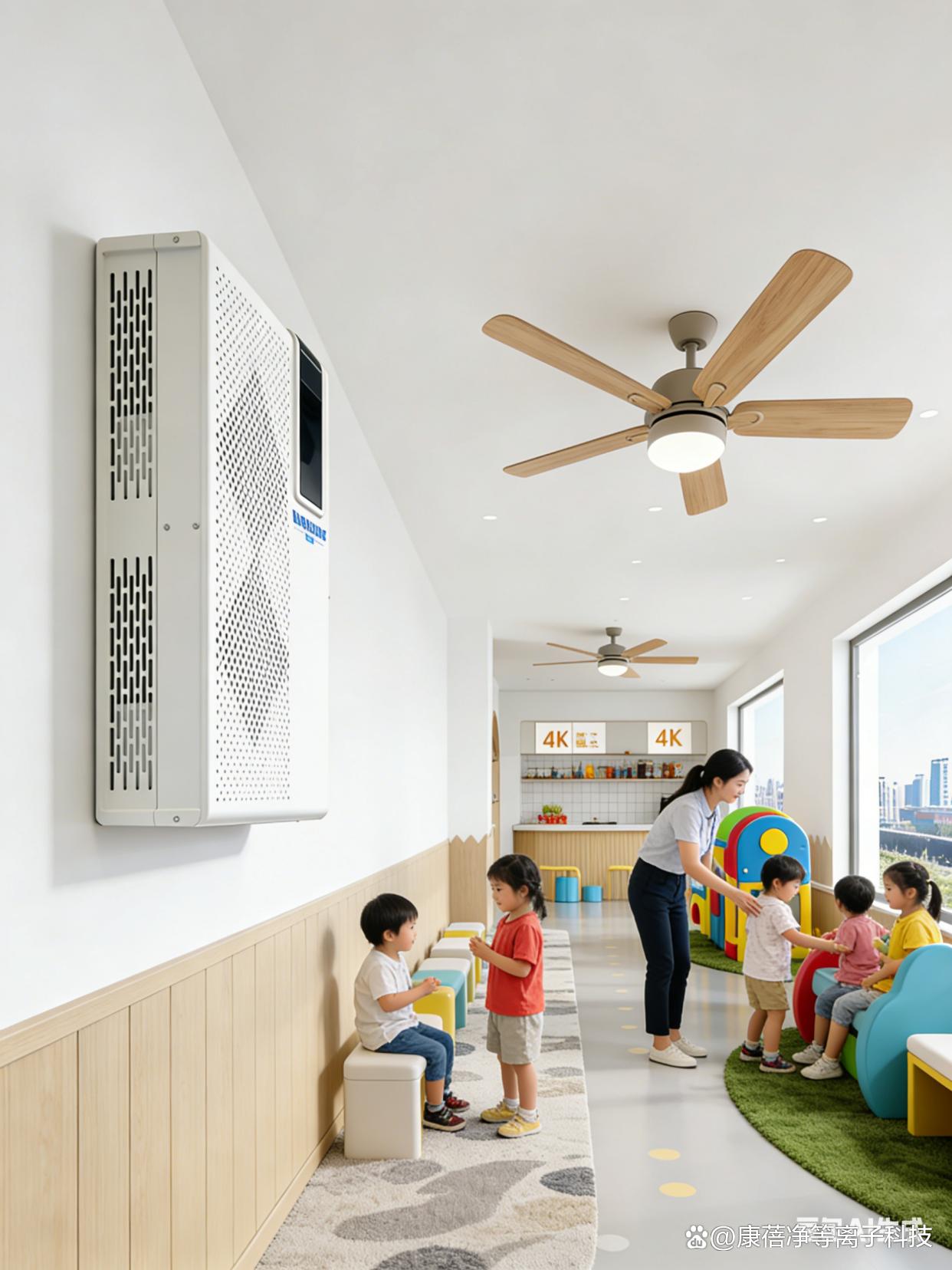
Hospitals / Schools / Hotels: KJ‑501T1 concealed ceiling‑mounted unit. Flush‑mounted installation preserves original interior decoration — especially essential for improving air quality in crowded collective environments as the new semester begins.
Closing Thoughts
Coughing and sneezing in seasonal transition are not always caused solely by outdoor conditions. Combine natural window ventilation with consistent mechanical purification to cut down pollen, dust‑mite debris and indoor dust. This approach brings greater reassurance than blind medication.
Does anyone in your household suffer from coughs or allergies as seasons change? Feel free to share in the comments. If you want customised equipment recommendations for your home or scenario, follow this account and send private message Solution. We will provide configuration suggestions based on your room size and number of occupants — marketing slogans aside, we deliver verifiable technical parameters.